Great Jeans, or Great Blunder? American Eagle’s risky Business with Sydney Sweeney
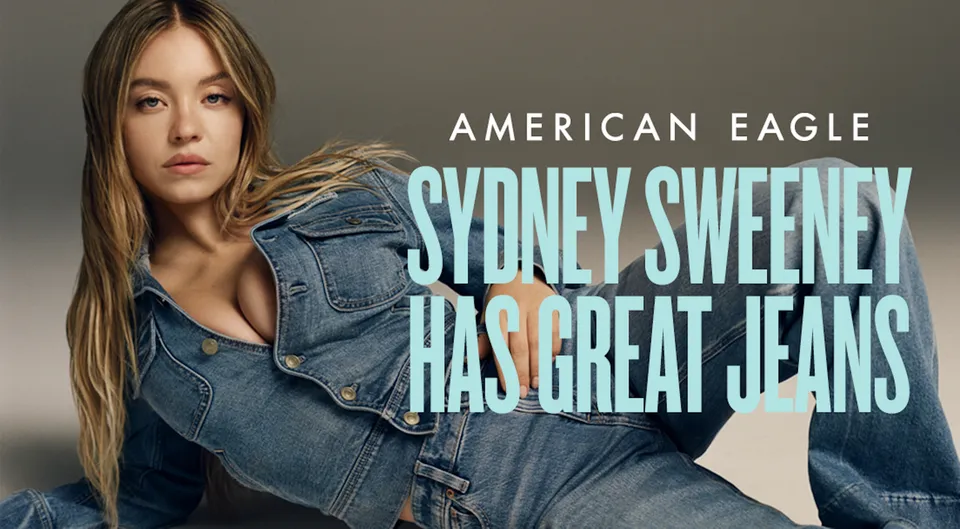
Great Jeans, or Great Blunder? American Eagle’s risky Business with Sydney Sweeney After watching many brands and their efforts to try to capture our attention, I’ve learned one thing: marketing is rarely boring. But every now and then, a campaign comes along that makes you spill your morning coffee. The American Eagle “Sydney Sweeney Has Great Jeans” campaign, was precisely that kind of moment. It was a whirlwind of celebrity power, clever wordplay, and, well, a whole lot of controversy. So, let’s pull back the curtain, shall we? We’ll look at what American Eagle was trying to achieve, what actually happened, and whether this was a calculated gamble that paid off, or a genuine misstep that left everyone scratching their heads. The Stage Was Set: A Brand in Need of a Buzz American Eagle, a brand synonymous with denim for generations, found itself in a bit of a bind. Heading into 2025, they reported a 5% year-over-year revenue dip in Q1, even pulling their 2025 guidance due to broader economic jitters. Not exactly a party. They needed a spark, a jolt, something to make people “reconsider and reengage” with the brand. Craig Brommers, American Eagle’s Chief Marketing Officer, saw the back-to-school season as their “Super Bowl”. This wasn’t just about selling jeans; it was about re-establishing American Eagle as the denim destination for Gen Z, a generation that, let’s be honest, doesn’t just buy clothes, they buy into values and experiences. The goal? To “cut through in culture”. And boy, did they cut through. Their big idea? Go all-in on one celebrity. A bold move, considering their past campaigns featured a roster of stars. But for Brommers, Sydney Sweeney was “the biggest get in the history of our brand”. Why Sweeney? She’s a rare talent, able to be “the face of a dual-gender brand” , sitting right “at the intersection of fashion, fame and digital culture”. She was, in his words, “that sweet spot”, not too young, not too mature. She even designed her own “Sydney Jean” with a butterfly motif, with proceeds going to Crisis Text Line, a mental health support service. A nice touch, right? A little bit of good karma mixed in with the marketing. The Campaign: A Masterclass in Modern Reach American Eagle didn’t just dip a toe in the water; they cannonballed. They unleashed a multi-channel blitz that was, frankly, impressive: The whole idea was to make it feel “personal”. Sweeney’s long-time stylist, Molly Dickson, curated the denim looks. Sweeney herself had even organically mentioned American Eagle in other campaigns, adding a layer of authenticity. It was all about her “girl next door charm and main character energy, paired with her ability to not take herself too seriously”. So far, so good, right? A big star, a massive media spend, and a cause marketing tie-in. What could possibly go wrong? The Firestorm: When “Cheeky” Becomes “Controversial” Ah, the best-laid plans. The campaign’s tagline, “Sydney Sweeney Has Great Jeans,” was meant to be a playful pun on “great genes”. A video even showed Sweeney crossing out “genes” and writing “jeans” on a billboard. In another clip, Sweeney’s voiceover explicitly stated, “Genes are passed down from parents to offspring, often determining traits like hair color, personality and even eye color. My genes are blue”. And that’s when the internet collectively gasped, then roared. Critics quickly pointed out that “great genes” carries some serious historical baggage. It’s a phrase “long associated with white supremacist ideals, used to promote whiteness, thinness, and eurocentric beauty standards”. When paired with Sydney Sweeney, a “blue-eyed, blonde-haired woman often labelled the embodiment of ‘classic American beauty’”, the message, for many, started to “resemble eugenic messaging”. Eugenics, for those who might need a refresher, is a discredited theory that aimed to “improve the genetic quality of the human population,” historically popular among white supremacists who believed in the “genetic superiority of Nordic, Germanic, and Anglo-Saxon peoples”. Suddenly, a seemingly innocent pun felt… loaded. Social media, particularly TikTok and X (formerly Twitter), erupted. People posted detailed “explainers,” drawing parallels to language used in Nazi Germany. Comments flew: “NAZI propaganda,” “fascist,” and questions like, “They could’ve gotten a beautiful Black woman to do this ad, but they picked a yt [white] woman instead…”. The backlash “slammed the ad for a lack of diversity and poor messaging”. Now, some folks, like TV host Megyn Kelly, jumped to the campaign’s defense, calling the accusations “absurd” and blaming the “lunatic left”. They argued it was clearly a reference to Sweeney’s body and the product, not her racial makeup. Others simply dismissed it as an “overexaggeration”. But here’s the kicker: through all this, neither Sydney Sweeney nor American Eagle issued a public statement addressing the uproar. Their Instagram post for the campaign remained live, though comments seemed to be heavily moderated. Silence, in this case, spoke volumes. The Numbers Game: Did It Work? Despite the firestorm, or perhaps because of it, the campaign delivered some eye-popping financial results. Beyond the stock market, the campaign certainly generated buzz. The main campaign video on American Eagle’s Instagram page racked up over 1.1 million views. Analysts noted the strategy “helped reconnect with Gen Z and revived the brand’s market buzz”. So, financially, it was a win. But at what cost? While the campaign “did boost business,” it came with the explicit acknowledgment that “social goodwill may have taken a hit”. Experts warned of “longer-term reputational risks,” especially with Gen Z and millennial consumers, who increasingly prefer socially conscious brands. Calculated Controversy or Tone-Deaf Blunder? My Take. This is where it gets interesting, isn’t it? Was American Eagle genuinely oblivious to the historical weight of “great genes,” or was this a calculated risk, a deliberate attempt to “push buttons” and “break through the noise” in a crowded market? From my vantage point, having seen countless campaigns rise and fall, I lean towards a calculated risk that perhaps misjudged the depth of the cultural nerve it would strike. Allen Adamson, a seasoned advertising expert,
Great Jeans, or Great Blunder? American Eagle’s risky Business with Sydney Sweeney Read More »