
The Strategy Spotlight

January 2026

Premiumization and Data-Driven Personalization Take Off: The Global Airline Marketing Landscape of 2026

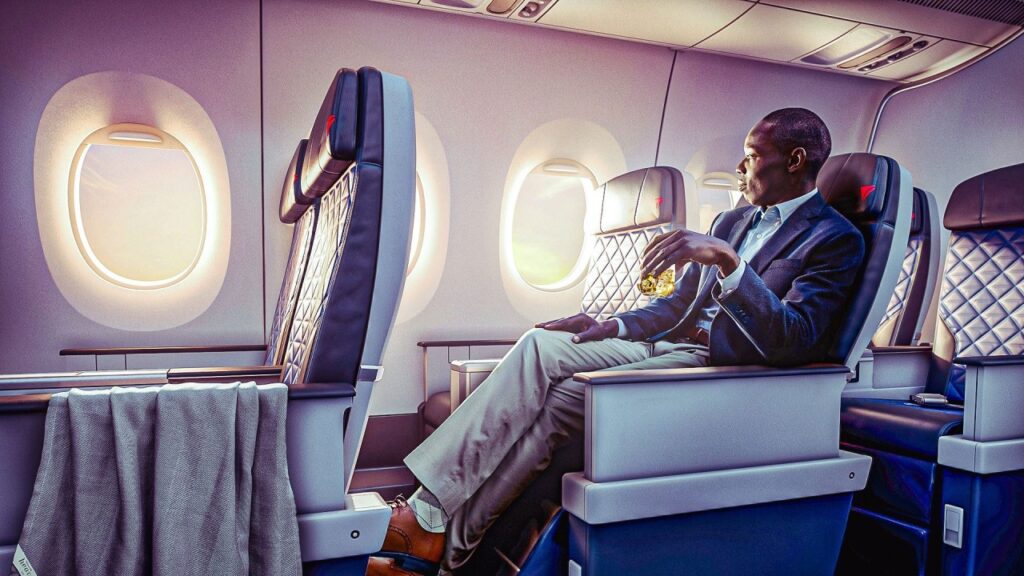
Premiumization and Data-Driven Personalization Take Off: The Global Airline Marketing Landscape of 2026 The Great Unbundling is Over. The Great Personalization has Begun. If you’ve spent any time on LinkedIn lately, you’ve seen the shift. The “race to the bottom” that defined the 2010s, where airlines competed solely on who could offer the cheapest, most plain experience, has hit a wall. In 2026, the industry is no longer recovering; it is maturing. We are witnessing a “K-shaped” recovery in real-time. On one side, airlines that failed to innovate are being swallowed by rising fuel costs and labor demands. On the other, the leaders, Delta, United, Emirates, and even a reinvented Spirit, are posting record-breaking margins. Why? Because they stopped selling “seats” and started selling “segments of one.” I. The Spirit Metamorphosis: From ULCC to “More Fly” The most fascinating case study of 2026 is undoubtedly Spirit Airlines. For years, Spirit was the punchline of late-night talk show jokes. They were the “yellow bus of the sky.” But the data showed a gap in the market: travelers wanted low prices, but they were tired of being treated like cargo. 1. The Four New Flavors of Travel Spirit’s “More Fly” platform is a masterclass in psychological pricing and premiumization for the masses. They didn’t just add a seat; they redefined their entire value proposition: Go Big: This is the “Big Front Seat” on steroids. It includes snacks, drinks, and a level of comfort that rivals legacy domestic first class, at a fraction of the cost. Go Comfy: This is the strategic winner. By guaranteeing a blocked middle seat, Spirit solved the #1 pain point of budget travel. It’s “European Business Class” logic applied to the US domestic market. Go Savvy & Go: These tiers keep the lights on for the ultra-budget traveler but remove the “gotcha” feeling by eliminating change and cancel fees across the board. 2. The Financial Logic Spirit isn’t doing this to be nice. They are doing it to capture high-yield leisure travelers. By realigning their network and streamlining these options, they’ve achieved $100 million in annual cost savings. They’ve moved the needle from “unbundled” to “curated,” proving that even a budget brand can command a premium if the value is clear. II. The Data Goldmine: United’s Kinective Media If Spirit is the king of physical premiumization, United Airlines is the king of digital monetization. In mid-2024, United launched Kinective Media, and by 2026, it has become a case study in how to turn a captive audience into a revenue stream. 1. The “Captive” Advantage The average flyer spends 3.5 hours staring at a seatback screen. United realized they weren’t just an airline; they were a media company. Using first-party loyalty data from 108 million MileagePlus members, they can now serve ads that are actually… useful. 2. Hyper-Personalization in Action Through Kinective Media, if United knows you are a high-net-worth traveler flying to London for a tech conference, you won’t see an ad for a generic soda. You’ll see a tailored offer from Chase for a premium credit card or a Macy’s ad featuring high-end luggage. This isn’t just advertising; it’s “Intelligent Commerce.” III. The Brand Halo: Delta’s “Restaurant in the Sky” Delta Air Lines has doubled down on the “Halo Effect.” They realized that premium travelers don’t just want a seat; they want to feel like they are in a high-end social club. Culinary Credibility: Partnerships with Chef José Andrés and Shake Shack create a “high-low” luxury mix that appeals to the modern traveler. Aesthetic Dominance: The introduction of Missoni-designed amenity kits and Taittinger Champagne in Delta One suites isn’t just about the product; it’s about the Instagrammable moments that drive organic reach. The Result: Delta consistently ranks in the top 15 of Fortune’s “Most Admired Companies.” They’ve turned a commodity service into a lifestyle brand. IV. The Infrastructure: Starlink and the “Always-On” Flyer Personalization is impossible without connectivity. The Lufthansa Group has set the 2026 standard by equipping its entire fleet of 850+ aircraft with Starlink. This isn’t just about Netflix. It’s about the Travel ID. By offering free high-speed Wi-Fi to anyone with a Travel ID, Lufthansa is funneling millions of passengers into their data ecosystem. Once you are logged in, the airline can track your preferences in real-time, offering you a lounge upgrade the moment your flight is delayed or a meal preference based on your previous three trips. V. The New Barriers: Trust, Safety, and the “Green” Tax As we pivot toward data-driven marketing, two massive hurdles have emerged in 2026: Cybersecurity and Sustainability. 1. Trust-Based Marketing With airlines collecting more personal data than ever, the threat landscape has exploded. Marketing teams are now “Security Storytellers.” They are winning by emphasizing Digital Safety as a brand pillar. If a traveler doesn’t trust your data handling, they won’t use your “personalized” app. 2. The End of “Vague Green” The UK’s DMCCA and EU regulations have officially ended the era of “vague” environmental claims. In 2026, if you say your flight is “green,” you better have the carbon receipts. Marketing has shifted to Transparent Reporting. Airlines like Air France-KLM are now using AI to show passengers exactly how much SAF (Sustainable Aviation Fuel) was used for their specific flight. VI. The LinkedIn Factor: The Human Face of Aviation In 2026, B2B airline marketing has moved away from corporate logos and toward Personal Brands. As a consultant, I’ve seen that the most successful campaigns of 2026 aren’t the ones with the biggest budgets, they are the ones where the leadership talks like a human. They share the struggles, the data “fails,” and the vision for a better sky. 6 Key Takeaways for the 2026 Strategy Conclusion: The Personal Touch in a Digital Sky The strategic pivot of 2026 is a paradox. We are using more data, more AI, and more high-speed tech than ever before, but the goal is to make travel feel more human. The airlines that are winning are the ones that use their
Premiumization and Data-Driven Personalization Take Off: The Global Airline Marketing Landscape of 2026 Read More »

Welcome to the era of the Heinz Dipper

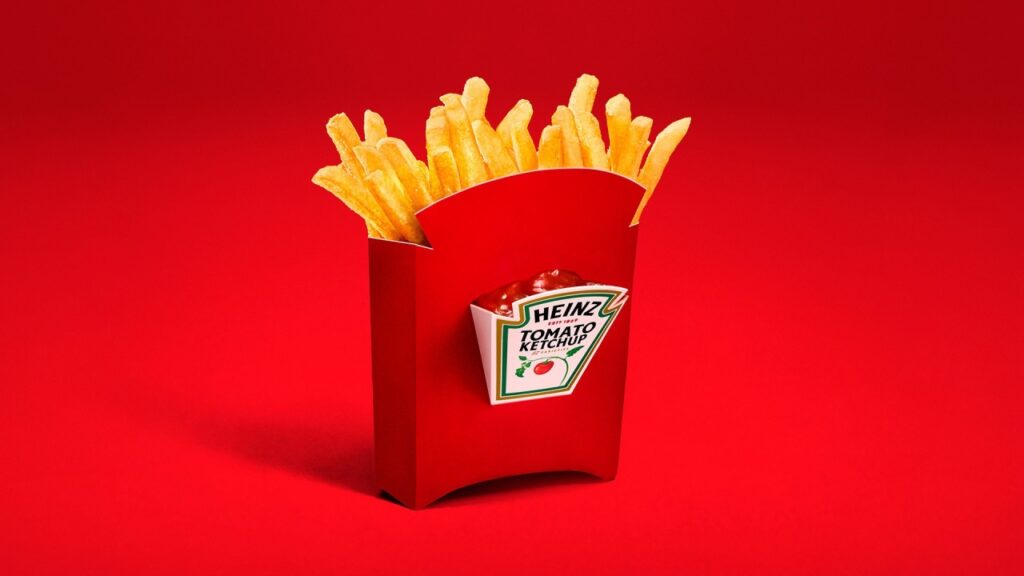
Welcome to the era of the Heinz Dipper When was the last time you tried to dip a French fry while driving? You’re one hand on the wheel, the other blindly reaching into a greasy brown bag. You find a fry. Great. Now, the boss level: the ketchup packet. You try to tear it with your teeth (don’t lie, we’ve all done it). It squirts on your jeans. You try to balance the open packet on the center console, but one sharp turn later, your car interior looks like a crime scene. It’s a mess. It’s frustrating. And according to Heinz, 80% of us have actually considered skipping the sauce entirely just to avoid the hassle. But Heinz, the brand that has spent 150 years making us wait for “slow” ketchup, isn’t about to let you eat a dry fry. Their latest move? They didn’t just change the sauce; they redesigned the entire French fry box. Welcome to the era of the Heinz Dipper. The Backstory: From “Looks Familiar” to Solving the Problem To understand why a cardboard box is making headlines in 2026, we have to look back at how Heinz has been “infiltrating” our brains lately. Last year, Heinz launched a campaign called “Looks Familiar.” They pointed out something so obvious we all missed it: the silhouette of a standard French fry box, the wide top tapering down to a narrow base, is almost identical to the Heinz Keystone logo. It was a brilliant piece of “passive” marketing. They essentially claimed every fry box in the world as a silent advertisement for Heinz. But while “Looks Familiar” was about brand recognition, the new Heinz Dipper campaign is about brand utility. Heinz realized that while we see their logo in the box, we can’t actually use the box to enjoy the product on the go. So, they decided to stop just talking about the shape and start making the shape work for us. The Innovation: A Patent-Pending Solution for the “70% Problem” The data behind this launch is surprisingly human. Heinz’s research found that 70% of people have spilled ketchup on themselves while eating in transit. The Heinz Dipper is a first-of-its-kind, patent-pending fry box. At first glance, it looks like your standard container, but it features a clever, fold-out “pouch” or compartment built directly into the side. In the U.S., they’ve strategically placed these in “high-intensity” eating zones: sports stadiums and late-night spots like Fat Sal’s in LA and Pat’s King of Steaks in Philly. They are meeting the consumer exactly where the mess is most likely to happen. Aligning with the “Irrational Love” Strategy For the past few years, under their global creative platform “It Has To Be Heinz,” the brand has stopped acting like a corporate giant and started acting like a fan. They’ve celebrated people who get Heinz tattoos. They’ve called out “Ketchup Fraud” (restaurants refilling Heinz bottles with cheap off-brands). They even partnered with Herschel to make ketchup-red luggage for people who pack their own sauce when they travel. The Heinz Dipper fits perfectly into this narrative. It says: “We know you love our ketchup so much that you’re willing to risk your car upholstery for it. We love you back, so we fixed the box.” By solving a functional problem (the mess), they are deepening an emotional connection. They aren’t selling you “thick, rich tomatoes” anymore; they are selling you a better Friday night drive-home. The Numbers: Why This Matters for the Bottom Line While the campaign feels fun and “humane,” the business logic is rock solid. The “Away From Home” Channel: Kraft Heinz reported roughly $26 billion in net sales in 2024. A huge growth lever for them is the “Away From Home” sector (restaurants and stadiums). By providing proprietary packaging, they make themselves indispensable to food service partners. 5 Key Takeaways for Marketers and Business Owners Before we wrap up, let’s look at what we can steal from the Heinz playbook for our own brands: Conclusion: The Power of the Pivot The Heinz Dipper is a masterclass in modern marketing. It shows that even a 150-year-old brand can stay relevant by being humble enough to realize their packaging was part of the problem. They didn’t just give us a new ad; they gave us a new way to eat. And in a world where we are all constantly on the move, that little cardboard pouch is more than just a design tweak, it’s a sign that Heinz is paying attention. So, next time you’re at a stadium or grabbing a late-night snack, look for the box with the extra pocket. Your jeans will thank you.

Welcome to the era of the Heinz Dipper Read More »

Stop Chasing Algorithms: Your 2026 Playbook to Win with AI Velocity, Data Control, and the Death of Page One

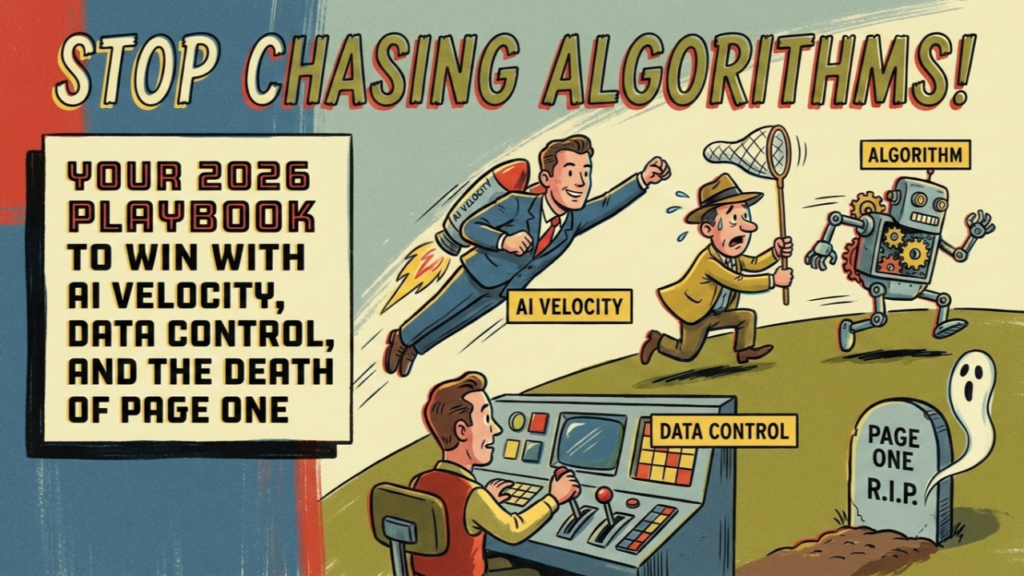
Stop Chasing Algorithms: Your 2026 Playbook to Win with AI Velocity, Data Control, and the Death of Page One Let’s be honest. If you’ve been in marketing for any length of time, you’ve heard the phrase, “This time, it’s different.” I’ve heard it, you’ve heard it. We heard it with the internet, then mobile, then cloud computing. They were all transformative, yes, but 2026 is bringing a change that is fundamentally, structurally, new. I’ve spent years guiding brands through digital transformations, and what I’m seeing now isn’t an upgrade. It’s a complete redesign. The old playbook, where you had time to get the technology right, optimize the process, and then scale, is dead. It has been replaced by a mandate for instant velocity, the existential challenge of Generative AI, and a core demand for data sovereignty. In short, if you’re still thinking about adding AI as a “tool,” you’ve already lost the game. Part I: The Compression of the S-Curve: Why Velocity Is Your New Strategy Do you remember how long it took for the internet to hit its stride, or for everyone to truly adopt mobile? Years. We had breathing room. Today, that breathing room is gone. This technological moment is defined by the compression of the S-curve. The distance between a technology’s emergence and its mainstream adoption is collapsing. If your organization is built for slow, sequential, incremental improvement, you simply cannot compete with competitors who are operating in continuous learning loops. This isn’t about having the best technology. That will soon be commoditized. The true competitive advantage has shifted entirely to what I call Organizational Metabolism. The gap between market leaders and organizational laggards is growing exponentially because innovation compounds. Every new AI capability makes the next one arrive faster. The primary mandate for marketing executives right now is an organizational design challenge, not a MarTech project. You need the managerial courage to redesign core processes, not just automate the existing, slow ones. Part II: The AI Imperative: From Tools to Agents The biggest headline for 2026 is the adoption of Agentic AI. Think beyond a chatbot writing an email. Agentic AI refers to systems capable of autonomously executing complex, multi-step tasks, they are the future of marketing workflow automation. The numbers are staggering, but they underscore the urgency: The global market for agentic AI is predicted to reach $45 billion by 2030. This isn’t theoretical; it’s an infrastructure investment. The Hidden Cost of Inference Here is a number most CMOs aren’t budgeting for yet: $200 billion. That’s the projected value of the dedicated AI chip market in data centers. Why does this matter to a marketer? The running of AI models, what we call inference, is forecast to account for two-thirds of all AI compute demands by 2026. The most specialized and powerful AI models require immense, centralized computational power. This means that while basic AI agents will be free or cheap, access to the high-performance, proprietary models you’ll need to beat the competition will be costly and centralized. Your Action Item: You must budget not just for software licensing, but for the high-capacity cloud compute resources required to fine-tune and run proprietary models at scale. Recognizing and budgeting for this hidden cost of inference is a non-negotiable part of high-performance AI deployment. Part III: The Visibility Crisis and the Rise of GEO I talk to marketers every day who are still obsessed with ‘ranking on page one.’ I have to break the news: Page One is dead. Consumer behavior is shifting from simple fact-finding to dynamic exploration. As users pivot from the traditional Search Engine Results Page (SERP) to the synthesized responses provided by AI Overviews, Copilot, and chatbots, the strategic objective has changed completely. Inside the Answer is the New Front Page The new mandate is to show up inside the answer synthesized by the generative engine. For brands, getting cited by the AI is the new measure of share-of-voice. If the AI fails to mention or quote your content, you are functionally invisible, you’re on the unvisited back page of the internet. This is why we must now focus on Generative Engine Optimization (GEO). GEO is the strategic practice of optimizing content specifically for consumption and utility by AI-powered search engines and chatbots. It shifts the focus away from tactical keyword-stuffing and toward creating content the AI can trust, understand, and use when synthesizing accurate answers. The GEO Playbook: Optimizing for Synthesis I have observed the citation patterns of major AI platforms. Here’s what I’ve learned, and what must guide your GEO strategy: Case in Point: Real Results with Targeted GEO We are already seeing the power of this shift. One Fintech company, through targeted optimization and data-driven insights, the essence of GEO, increased its signups by a whopping 227.9% in just six months. This isn’t magic; it’s engineering content to be cited by the AI. This is why your SEO team must stop reacting to algorithm updates and start anticipating user intent, moving toward predictive content ecosystems. AI can now analyze user journeys and recommend collections of related topics that establish true domain authority. You are no longer playing catch-up; you are positioning your brand as the thought leader who anticipates the future. Part IV: Data Sovereignty, First-Party Fuel and Clean Rooms The post-cookie world is here, and it’s the best thing that ever happened to performance marketers. Why? Because the reliance on shaky, temporary third-party data is over. Data ownership is now foundational to the marketing stack. High-quality, consented first-party data is the necessary signaling mechanism that feeds the sophisticated AI models required for sustained growth. The strategy must pivot entirely to developing behavioral cohorts founded on owned assets: loyalty sign-ups, interactive quizzes, strategically gated content. The Privacy Safe Haven: Data Clean Rooms As first-party data becomes your strategic asset, the challenge becomes: How do you collaborate and measure securely with partners without compromising customer privacy? The answer is the Data Clean Room (DCR). DCRs (like those provided by AWS

Stop Chasing Algorithms: Your 2026 Playbook to Win with AI Velocity, Data Control, and the Death of Page One Read More »