Think about all the ads you see every day. It’s a loud mess out there, right? Most companies just shout the same old stuff, and honestly, we just stop listening. Marketers call this cognitive immunity. Basically, our brains tune out anything that sounds boring or the same as everything else.
To actually break through this wall of noise, a brand needs to stop trying to be perfect and start being real. It needs to choose total honesty over glossy pictures.
That’s the core of Burger King’s strategy over the last few years, leading right up to their sweet and honest “It’s Only Natural” campaign. This long-game approach, running for years, not just months, proves that when you mix self-humor, genuine emotion, and super clear branding, you don’t just sell burgers; you build a brand people truly love.
The Rule of Fun: Why Burger King Chose Vulnerability
The first rule Burger King follows is this: Never, ever bore people to death. When every competitor promises “the best quality,” the word “quality” loses all its meaning.
Burger King has always been that fun, slightly cheeky friend who isn’t afraid to poke fun at the big guys or even themselves. They use humor and smart, tactical moves because it’s efficient, not just for kicks. Take the famous “Whopper Detour” campaign, that’s genius in action.
How they pulled off that clever trick:
They used phone location technology to pull off a brilliant prank: You could get a Whopper for just one penny, if you were within 600 feet of a McDonald’s! This trick led to 1.5 million app downloads in only nine days and brought in an incredible 37 times the money they spent on the ad (37:1 ROAS). They basically turned their rival’s restaurant into their own welcome mat. It shows that winning marketing isn’t about waiting for luck; it’s about making your own opportunities.
The Long Game: You Must Run for Years, Not Just Months
Great campaigns aren’t just a flash in the pan. They need to stick around for years, not just months, for the message to truly sink in. For that to work, the advertising has to be based on something real that the company is doing. Burger King didn’t just wake up and decide to run the “It’s Only Natural” ad; they spent years building the real story first.
The company went on a huge, worldwide mission to get rid of fake stuff in their food. This wasn’t easy, but it was essential. By 2020, they had kicked out 120 artificial ingredients, like fake colors, flavors, and preservatives, from the Whopper in the U.S. Think about that: they removed 8,500 tons of artificial preservatives globally.
This huge effort teaches us a key lesson: What you do must always come before what you say in your ads. Burger King did the hard work first. The marketing campaigns that followed, from the shocking to the heartwarming, were simply undeniable proof that they kept their promise. This sequence: Action first, Proof second, Emotion third, makes the message feel like a solid fact, not just an empty commercial promise.

Phase 1: The Ugly Truth, Making Friends with Mold
To prove they were committed to real ingredients, Burger King needed a marketing strategy that was just as fearless. Most fast-food ads show a perfect, shiny burger with some forgettable slogan. But Burger King said, “Nope.” They went the complete opposite way, using extreme, hilarious self-deprecating humor.
The Shock That Worked: The Moldy Whopper
The famous 2020 “Moldy Whopper” ad showed a Whopper rotting right before your eyes over 34 days, turning into a fuzzy, greenish-blue mess. This broke every single rule in the Food Advertising 101 book, food advertising is supposed to be appetizing, after all.
The tagline was the best kind of self-aware joke: “The beauty of real food is that it gets ugly”.
Burger King basically roasted their own star product to make a point. They showed their burger at its absolute grossest, and in doing so, they showed radical honesty. It was like saying, “Hey, we have nothing to hide…ever.” This act of corporate vulnerability makes the brand feel instantly human and trustworthy.
It also landed a clear, funny punch at the competition. The ad came out at a time when people had long wondered why a rival’s burgers seemed to last forever without decaying. By showing a burger that decays naturally, Burger King drew a clear line in the sand: Ours is the real one.
Branding Through Shock: Make Sure They Remember You
A shocking ad only works if everyone remembers who made it. If people are grossed out but forget the brand, you wasted your time. Burger King made sure the Whopper name and the logo were glued right next to that moldy picture, guaranteeing massive brand recall.
The risk paid off huge. Check out the numbers:
- Sales increase: 14% lift following campaign launch. Instant sales success from a controversial idea.
- Earned Media Value: $40 Million (8.4 to 8.7 Billion Impressions). Creative shock turns into massive, free global brand buzz
- Preservative Awareness: 400% Boost. Proves the main message was heard loud and clear
- Positive Brand Perception: 88% Increase. People respected the brand’s honesty, not just the burger
This controversial content got people talking, driving engagement rates up to three times higher than typical fast-food ads. While one study suggested the mold might have made people less likely to visit right away , the huge long-term results, billions of impressions and sustained sales growth, show that taking a big, calculated risk beats playing it safe every time. The controversy itself was the fuel.

Navigating the Nuance: The Reality Check
To be fair, we have to look at the whole picture. The “Moldy Whopper” was brilliant marketing, but it immediately got called out by some critics.
The “Is It Healthy?” Question
The main pushback was that removing preservatives amounted to “nutrition-washing,” meaning Burger King was trying to trick customers into thinking the Whopper was suddenly a “healthy” meal. Critics pointed out that while the food is “cleaner,” the Whopper is still far from a health food.
Let’s be real about the nutritional facts: A standard Whopper still has 39 grams of total fat, including 2 grams of trans fat (which is the daily limit for most people), and a high amount of sodium: 690 milligrams.
Why Transparency Still Wins
Despite these valid health concerns, the campaign was still a massive strategic win. In a world full of confusing health claims, consumers often prioritize feeling like they can trust the brand over the exact nutritional numbers. Burger King realized that today, “natural” means more than just calories; it means purity, the food should act like real food, which means it eventually goes bad.
By focusing the entire conversation on ingredient purity and authenticity using that shocking, visual proof, Burger King successfully sidestepped the tougher talks about fat and sodium content. They won the trust battle by exposing the truth, creating a huge difference between themselves and their competitors. This set the stage for the next, more lovable chapter.

Phase 2: The Empathy Payoff, “It’s Only Natural”
After the big, messy shock of the Moldy Whopper, Burger King knew they had to change the mood. You can’t just keep being controversial; people get tired of that. The next campaign needed to be positive, relatable, and focus on one big, warm feeling: empathy.
The Universal Truth: Kids Crave Real Taste
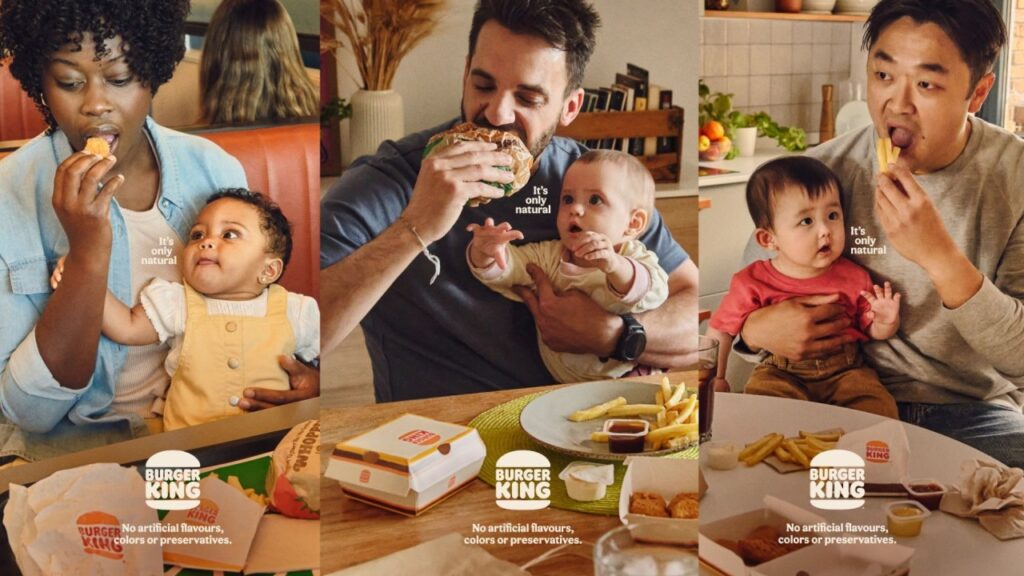
The “It’s Only Natural” campaign is the sweet ending to this whole story. It’s a series of charming, real-life videos, all filmed on people’s phones. You see babies and toddlers freaking out, in a cute way, as their parents take a bite of the Whopper.
The genius here is that it’s so simple and real: the videos didn’t need any actors or dialogue, because they used a universal human truth: little kids always want what Mom or Dad is eating. That primal craving becomes the perfect way to talk about the food’s core message.
The connection is subtle but strong: the desire these children show is natural, just like the ingredients in the Whopper are now natural and preservative-free. This happy, relatable scene instantly connects the burger’s great taste to its new ingredient standards. The Executive Creative Directors noted that when something is “truly human, it becomes naturally global”. This simplicity means the message works everywhere, which is perfect for a big global brand like Burger King.
Building Loyalty with Positive Feelings
This second phase provides the positive boost needed for long-term loyalty. The Moldy Whopper got our attention through shock; “It’s Only Natural” keeps the brand in our minds through warm feelings and relatability.
By using real, user-generated content (UGC)-style footage, Burger King sends a clear signal that they are approachable and transparent, connecting the corporate brand with genuine, everyday consumer experience. This brilliant one-two punch, using rational proof (the Moldy Whopper) followed by emotional desire (It’s Only Natural), ensures the massive shift to clean ingredients is validated in every way. Longevity comes from constantly moving the conversation forward, not just repeating the same thing.

The Model for Longevity: Why Emotion Pays the Bills
Burger King’s ingredient story is the perfect example of how to make advertising dollars work harder over the long term. Their success is all about how the different phases work together.
The Synthesis of Strategy: From Gross to Great
The journey from the confrontational “Moldy Whopper” to the heartwarming “It’s Only Natural” shows they totally get how to keep a brand conversation running for years.
The Moldy Whopper hit the customer’s skeptical side (“Show me the proof!”), using shock to force attention and confirm the facts. The It’s Only Natural campaign hit the customer’s emotional, primal side (“I want that!”), using empathy and desire to form a lasting connection. This dynamic duo ensures the brand’s big promise is proven logically and felt emotionally.
This bold, consistent voice is maintained because Burger King works closely with great creative partners, like INGO The Agency, who helped create both the moldy ad and the baby ad. This consistency means that even when the ads look totally different, the core brand personality, bold, transparent, and a bit rebellious, stays the same.
The Financial Proof: Good Feelings, Great Returns
The growing success from this sustained, emotional strategy is clear in the sales reports:
- Moldy Whopper (2020): Disgust/Shock, Establish Proof of commitment (Removing 120+ fake ingredients),Extreme Self-Humor & Visual Proof. 400% Awareness Boost of ingredient removal
- It’s Only Natural (Ongoing): Empathy/Desire, Cement Emotional Link to natural taste and quality, Universal Human Insight (Baby Craving) & Real-Life Footage. Extends the story and reinforces long-term sales lift
The money side is strong: the first 14% sales lift after the Moldy Whopper was followed by further growth from later campaigns, resulting in overall sales increases of up to 22% in some markets, and a fantastic 32% rise in drive-thru sales during related promotions .
That high engagement rate, three times higher than normal ads, means they spent their money efficiently. They didn’t just buy eyeballs; they bought conversation. The massive earned media value ($40 million) means Burger King’s budget went to creative breakthroughs, not just saturation. This strategy builds brand love through “perfectly imperfect” storytelling, which younger customers truly appreciate.

Seven Foundational Takeaways: Your Blueprint for High-Impact Marketing
The Burger King story is full of great, simple lessons for anyone who wants to build a brand that lasts, gets a huge emotional reaction, and delivers big returns over many years.
1. Don’t Be Afraid to Be Weird and Uncomfortable.
If your ad idea doesn’t make your team a little bit nervous, it’s probably too boring. The big takeaway is that calculated creative risk, like showing a rotting burger, brings in massive free media (earned media) that standard campaigns can’t even dream of. Find the big problem everyone in your industry ignores and tackle it with raw, unfiltered proof.
2. What You Do Comes Before What You Say.
These billion-impression campaigns worked because the ingredient removal was a real, multi-year, costly change inside the business. You can’t just put lipstick on a pig. Your advertising must be a genuine celebration of a solid, real thing you did. The cheapest, most efficient marketing happens when your message is simply the undeniable truth.
3. Build a Story Arc, Not Just a Single Ad.
You don’t get longevity by just playing the same ad over and over. You need to take your audience on an emotional journey: Shock → Trust (Moldy Whopper) → Empathy → Desire (“It’s Only Natural”). This way, the message feels fresh and dynamic while always reinforcing the same core promise over several years.
4. Self-Humor is a Fast Track to Trust.
Being honest and funny about your own flaws instantly makes your brand feel human. Burger King was happy to show its main product in the worst possible way, practically joking about how real food is gross sometimes. This kind of corporate honesty builds customer trust much faster than promises of perfection.
5. Brand Everything, Especially the Weird Stuff.
When you create a viral moment or a controversial ad, you must ensure the product and brand name are impossible to separate from the message. The $40 million in free media from the Moldy Whopper worked only because people couldn’t talk about the moldy image without saying “Burger King” and “Whopper”.
6. Use Simple Human Feelings to Go Global.
The technical facts (like removing 120 preservatives) matter for credibility, but simple human feelings work everywhere. The idea that “kids crave what their parents are enjoying” is a universal truth. That simple, unscripted moment makes the ad relatable and powerful in any country.
7. Measure Buzz and Conversation, Not Just Clicks.
The most powerful campaigns aim for huge conversation, massive awareness, and credibility—the 8.4 billion impressions and the 400% spike in awareness. This noise and public trust are what drive long-term sales lifts (14% to 22%) far more effectively than just optimizing for short-term clicks . Focus on making noise and getting people talking.

Conclusion: The Brand That Dared to Be Human Wins
Burger King’s journey from the shocking “Moldy Whopper” to the relatable “It’s Only Natural” isn’t just a collection of great commercials. It’s a complete roadmap for building a brand that wins big when trust is the most important thing.
This strategy proves that the best advertising isn’t about having the biggest budget; it’s about being the most human. When a brand bases its message on real changes, tells the truth even if it’s ugly, and uses empathy to connect those facts to what customers feel, it stops competing in the crowded fast-food aisle. It becomes a personality people trust.
Burger King dared to embrace the messy truth. In doing so, they achieved both massive cultural fame and sustained, long-term sales success. The choice for marketers is clear: You can join the expensive, boring shouting match of manufactured perfection, or you can take a strategic risk, be honest, and let your brand’s humanity rule the conversation.