Welcome back to the cutting edge of modern business strategy. As a marketing consultant, I’ve spent years studying the pulse of consumer behavior. The biggest lesson? People don’t buy products; they buy better versions of themselves.
That is the entire, profitable philosophy behind premiumisation.
We are moving past the archaic notion that growth simply means squeezing more volume onto the market. That’s exhausting, margin-killing work. The sophisticated game today is about elevating every element of your offering: the packaging, the story, the experience, to justify a price that makes your competition weep.
This isn’t just about survival in a tough economy; it’s about establishing dominance. Premiumisation is the strategy that turns everyday buys into must-have rituals, granting brands fierce loyalty and fatter margins. Let’s delve deep into the strategy that is rewriting the rules of brand success.

The Whisper of Luxury: Defining the Premiumisation Playbook
Think about your daily choices. Why do you choose that specific, slightly pricier artisanal sourdough over the mass-produced white loaf? Why that specific craft beer instead of the ubiquitous big-name lager?
This decision isn’t purely rational; it’s emotional. It’s a vote for something “better”.
Premiumisation is the deliberate, strategic process of raising the perceived value of a product or service enough to charge a significantly higher price, without alienating your core customer base.
It works by masterfully deploying two critical levers:
- The Tangible Upgrade: This is the physical proof. Superior ingredients (like Häagen-Dazs’s cream content), higher performance (think Dyson), or demonstrable craftsmanship (artisanal coffee roasting).
- The Symbolic Upgrade: This is the emotional narrative. It includes luxury design, heritage storytelling, exclusivity through limited drops, or aligning the brand with a higher purpose (like sustainability or ethical sourcing).
Marketers are using this precisely to defend and grow their profit margins. When ingredient costs surge, a premium product can absorb that inflation without having to shrink the package or dilute the quality, thereby protecting both the balance sheet and the brand promise.

The Genesis: Economic Paradox and The Roots of the Trend
Why did this strategy explode in the face of austerity? It’s the Economic Paradox of the modern consumer.
The “Trade Down, Trade Up” Phenomenon
In the wake of major economic shocks, from the 2008 financial crisis to the recent inflation surge, consumer spending fractured. People became incredibly selective:
- Trade Down: They cut bulk spending on true commodities (utilities, basic groceries) to save money.
- Trade Up (The Treat): They consciously splurged on affordable luxuries that provided maximum emotional reward. A slightly fancier vodka (Grey Goose) or a decadent ice cream (Häagen-Dazs) becomes a small, daily act of rebellion against the financial squeeze.
Brands that recognized this shift, that consumers were trading volume for value, became unstoppable. They realized that chasing market share volume was a low-margin trap. Chasing value and loyalty was the high-margin highway.

The Hard Numbers Behind the Shift
The evidence isn’t anecdotal; it’s financial bedrock:
- Global Luxury Market: The market for personal luxury goods is expected to hit nearly $589 billion by 2030. This sustained, high-CAGR growth proves the enduring global appetite for premium experiences.
- Price/Mix Dominance: In the FMCG sector globally, most industry leaders are now reporting that their top-line growth is overwhelmingly driven by “price and mix” adjustments, not sheer volume expansion. For some, premium offerings contributed over 70% of total revenue growth in recent quarters. This means profits are growing significantly faster than sales units.
- The India Example: The robust value growth of $42\%$ in the Indian FMCG sector due to premium shifts underscores that this trend transcends developed markets; it’s a global strategy for modern consumers who are increasingly status and quality-conscious.


Real-World Wins: Case Studies in Value Elevation
To truly understand this, we need to look at brands that perfectly engineered the emotional and physical upgrade.
Diageo: The Johnnie Walker Ladder
Diageo is the master architect of the tiered portfolio. They don’t just sell one Scotch; they sell an ascending journey. Their goal is not just the first sale, but the fifth, tenth, and twentieth sale at increasingly higher price points. The success here is quantified by the staggering 71% of their organic net sales growth coming from their ‘super-premium’ and ‘premium-plus’ segments. They prove you can maintain a high-volume base while extracting exponential value from your most loyal customers.
Starbucks: Turning Coffee into a Customized Ritual
Starbucks’ genius wasn’t just the quality of the bean, but the quality of the experience. They offer a comfortable environment, personalized service, and a digital loyalty loop (the app) that makes you feel recognized and rewarded. Their strategy leverages the customization premium, the willingness to pay more because you designed the product yourself. This experience-led model ensures customers remain dedicated, even as fierce, cheaper competition tries to chip away at their market.
Grey Goose: The Packaging Premium
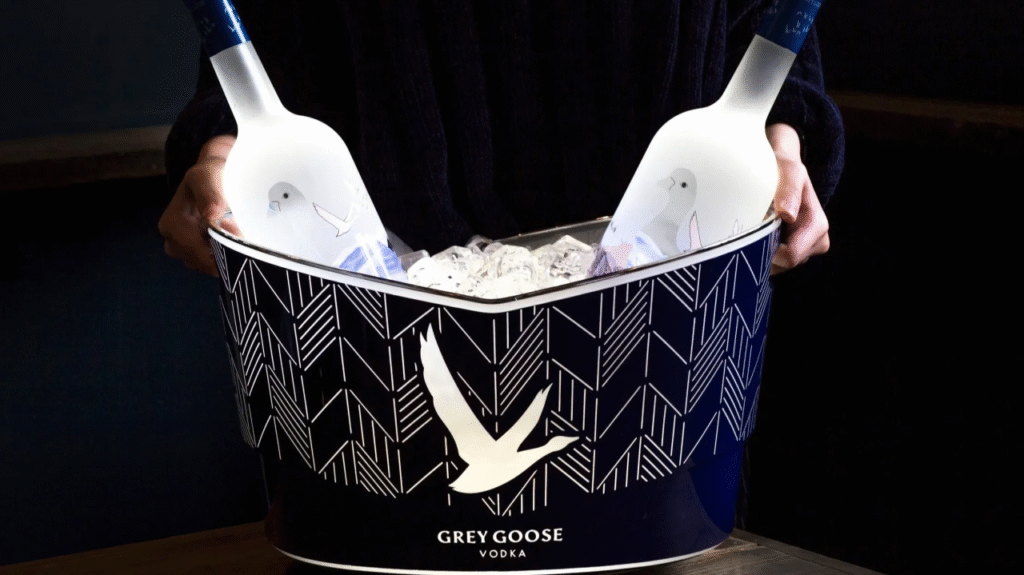
Grey Goose vodka is a masterclass in symbolic value. Before it became popular, the vodka market was often utilitarian. Grey Goose arrived with its tall, frosted, sleek bottle. It was marketed not just as a spirit, but as a lifestyle symbol, the official vodka of the high-end nightclub and the discerning consumer. The packaging and the French heritage story alone justified a price point far exceeding its competitors, demonstrating that design and narrative can elevate value just as much as an ingredient upgrade.

The Marketer’s Toolkit: Five Levers for Engineering Value
How do we actually build this premium experience? It involves strategic investment in every touchpoint.
1. Quality & Craftsmanship: The Non-Negotiable Core
The product must deliver. KIND Snacks succeeded by visually displaying ingredients, leaning into the health and transparency premium. Australian food brands, like Primo, introduced gourmet sausages in striking black packaging with high-end recipes, effectively bringing the butcher-shop experience into the supermarket aisle. This is a subtle but powerful quality boost.
2. Design and Packaging Pop: The Silent Promise
Packaging is the first, and often most important, piece of advertising. It needs to convey luxury cues—weight, texture, and visual simplicity. The packaging market associated with high-end goods is surging because it creates shelf standout and primes the consumer’s mind for a superior experience.
3. Exclusivity Hooks: The Scarcity Sensation
Exclusivity is a powerful psychological trigger. Limited editions, time-bound “drops,” and restricted access (like an exclusive loyalty tier or a boutique retail location) make the product feel like a status symbol. This strategy increases hype and allows brands to demand significant premiums, often seeing secondary markets emerge where products are resold for hundreds more.
4. Story Magic: Heritage, Purpose, and Mythos
Consumers are hungry for meaning. Brands like Bulleit bourbon or Ghirardelli leverage authentic heritage. But purpose also builds mythos: The rise of eco-luxury and sustainable brands demonstrates that consumers will pay a premium to align their purchases with their values. Sustainability is now a premium feature.
5. Retail Context and Cross-Selling: Controlling the Narrative
The context in which a product is presented defines its value. Selling premium goods through curated boutiques or specialized retail channels (like San Pellegrino dominating fine dining) reinforces the high-end positioning. Furthermore, cross-selling, pairing a premium spirit with an artisanal mixer, elevates the total basket size and the overall luxury impression.

Strategic Watchouts: Avoiding the Pitfalls
The line between successful premiumisation and consumer alienation is thin.
- The Credibility Gap: Premiumisation fails when perceived as merely a price hike dressed up with a new label. This leads to accusations of greedflation and erodes brand trust. The value must keep pace with the price.
- Balancing the Portfolio: A common mistake is going “all in” on premium and alienating the value-conscious segment. Successful brands, like Diageo, maintain clear tiers, ensuring there’s an entry point while heavily pushing the aspirational upgrades.

Seven Key Takeaways I’ve Learned the Hard Way
After years of running these playbooks, here are the seven most important lessons I carry into every new project. These are the principles that separate a profit-boosting success from a margin-draining flop.
- Authenticity is the Baseline, Not a Bonus: Fake premium flops fast. The upgraded ingredients, the better service, the heritage story, it all has to be true to the brand’s soul. Consumers are incredibly sophisticated and will sniff out a price hike based on packaging alone. The value must be felt.
- Mix Tiers, Don’t Ditch the Base: Never abandon your entry-level products. Premiumisation works best as a ladder. The base tier keeps the funnel full, and the premium tiers offer a clear path for loyal customers to climb. This portfolio architecture is non-negotiable for sustained success (Diageo’s 71% growth proves this).
- Stories Trump Features/Specs: Everyone can add a new feature. Few can create a narrative that makes me feel something. Don’t just list the technical specs; tell me about the 150-year-old family recipe, the artisanal crafting process, or the sustainable mission. Make them feel, not just buy.
- Data is Your Secret Weapon: Guessing which upgrade the customer will pay for is marketing suicide. Track your SKUs, monitor income demographics, and analyze loyalty data. Use this precision to inform exactly where the premium investment (ingredient upgrade vs. packaging change) will pay off.
- Exclusivity Must Evolve: The meaning of “exclusive” is constantly changing. Yesterday, it was a limited-edition drop. Today, it might be an AI-driven, hyper-personalized product that only exists for me. Marketers must stay agile and fresh in how they deliver scarcity.
- The Emotional Lift is the Real ROI: The most profitable premium products deliver an emotional payoff far exceeding their price increase. Whether it’s status, self-care, or guilt-free sustainability, the successful brand sells a small dose of emotional transcendence with the physical product.
- Premiumisation is Margin Defense: In an inflationary world, the strategy isn’t just about offense (growth); it’s about defense (protecting margins). By getting customers to accept a higher ticket price due to perceived value, you offset your rising material and labor costs without resorting to painful, reputation-damaging cost-cutting.

Conclusion: Chasing Value That Sings
I love talking about premiumisation because it represents the best of marketing. It’s the moment we stop racing to the bottom on price and instead commit to providing truly differentiated value.
It’s not a temporary trick; it’s an evolution of the brand itself. I have watched client companies be reborn, profits rocket, and legions of loyal fans multiply because they chose to elevate their offering.
In a world of overwhelming sameness and endless choice, the brands that win are the ones that dare to carve out a legend. They chase the value that doesn’t just sell, but sings.
Your brand’s next chapter isn’t about selling more units; it’s about making each unit a special, desirable experience. Go build your legend!