
You look at your brand strategy every day, searching for that spark, the idea that moves your company from “doing well” to “changing the game.” You want that explosive growth, the kind that makes headlines and rewrites financial reports.
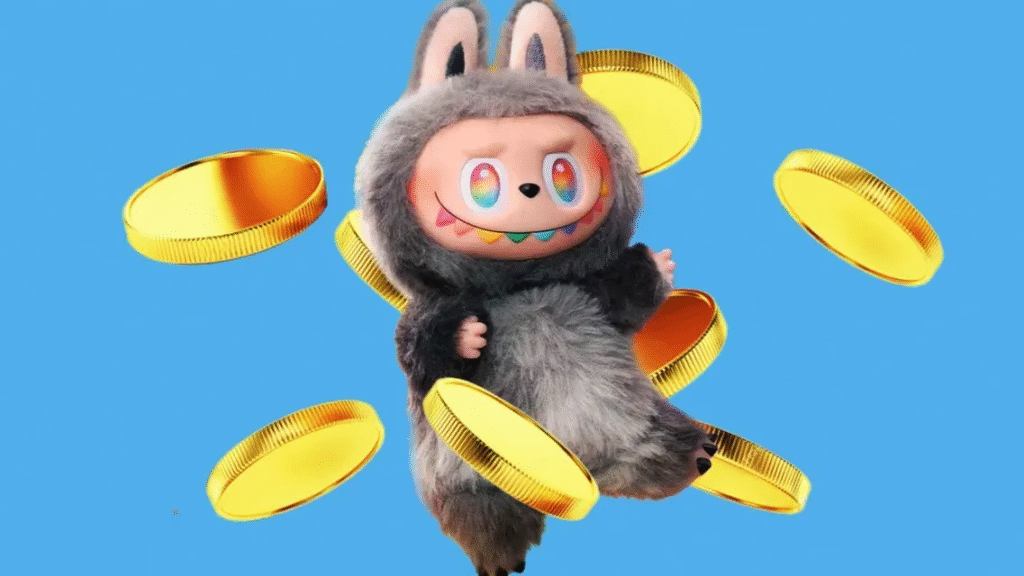
I’ve been in marketing for 15 years. I’ve seen fleeting trends and I’ve seen sustained wealth creation. Right now, the best case study in the world for converting cultural momentum into cold, hard capital is a small, snaggle-toothed, monkey-like elf called Labubu.
Labubu is a doll. It’s a collectible. It’s also the force that propelled its parent company, Pop Mart International, into the stratosphere, adding $1.6 billion to its CEO’s personal net worth in a single day.
Forget the noise. This isn’t luck. This is a masterclass in modern psycho-economics, scarcity engineering, and viral amplification. This is how you manufacture obsession. If you want to understand how to turn a product into an asset, you need to dissect this phenomenon. Let’s look at the strategy that delivered that eye-watering number.

Part I: The Strategy of Aesthetic Polarization
Every successful cultural product starts with the identity. If your brand looks like everyone else’s, you’ve already lost the game. Labubu succeeded because it chose to be different, even a little strange.
The Power of “Ugly-Cute”
Labubu is the creation of artist Kasing Lung, who took inspiration from Nordic fairy tales and folklore when he started “The Monsters” series in 2015. Lung, a Hong Kong native who worked as a children’s book illustrator in Belgium , designed Labubu as a mischievous forest elf with a devilish grin and serrated teeth. It’s an aesthetic that critics call “ugly-cute.”

This is important. You might assume your product needs to be universally pleasing, but that only guarantees mass indifference. Labubu’s quirkiness secured immediate market differentiation. It appealed directly to the Gen Z consumer who prioritizes authenticity over conventional beauty. The character is the result of what happens when a Cabbage Patch Kid meets a Tim Burton claymation figure.
This aesthetic, whimsical, a little rough, and highly original, has global appeal. Labubu is the company’s bestselling IP globally. Contrast this with the company’s original, and still most popular, character in mainland China: Molly, a girl with emerald eyes and a distinct pout. This difference suggests that the quirky, internationally palatable design of Labubu offers a universality that accelerates global expansion faster than characters with a more localized feel.
- Lesson 1: Be polarizing, not generic. Your customers are not looking for the perfect product. They are looking for the unique product that helps them construct their self-identity. The doll, which is inexpensive in the primary market, instantly becomes a symbol of individuality and a form of social expression.
Targeting the “Kidult” Collector
The true target audience here is not children. It’s the “kidult” market: young adults seeking nostalgia and self-expression through collecting. This segment is key.
The consumption behavior associated with Labubu is highly social and self-expressive. Collecting these figures fulfills critical psychological needs for both group association and the construction of self-identity, including uniqueness, individuality, and autonomy.
- Think of it this way: by displaying these distinct collectibles, collectors present themselves to others, using the toy as a medium for approval-seeking on social media. This validates the IP’s high perceived value. The long development cycle of the IP, created in 2015 but only dominating commercially years later, shows you that viral success starts with a strong, intrinsically resonant product foundation. The art is the prerequisite for the wealth.

Part II: The Money Proof, Turning Hype into Capital
The story of Labubu is backed by hard numbers. These metrics show how quickly a strategic marketing model can generate massive financial acceleration.
The Scale of the Surge
Pop Mart’s financial performance since the Labubu craze accelerated has been explosive. Look at these markers:
- Revenue Doubling: Pop Mart’s annual revenue soared from $887 million in 2023 to $1.8 billion in 2024. That’s a 100%+ year-over-year increase. CEO Wang Ning believes reaching $4.2 billion in revenue in 2025 will be “quite easy,” which would more than double the company’s 2024 figures again.
- IP Dominance: The Labubu IP, packaged under “The Monsters” series, rapidly became the company’s revenue engine. In 2024, “The Monsters” generated RMB 3.04 billion (approximately $430 million), accounting for 23.3% of total revenue. Crucially, the growth rate accelerated sharply. In the first half of 2025 alone, “The Monsters” generated RMB 4.81 billion (about $670 million), representing an accelerated contribution of 34.7% of Pop Mart’s total revenue for the period. The Labubu line specifically saw a 720% jump in revenue last year.
The market saw this acceleration and responded instantly. Pop Mart’s stock exploded over 1200% , justifying the $1.6 billion increase in the CEO’s net worth.
The Loyalty Metric That Matters
You can’t build a billion-dollar brand on one-time sales. The true measure of Pop Mart’s strategic success is its customer retention.
The company’s member repurchase rate stands at 49.4%. Furthermore, registered members contribute 92.7% of total sales.
This level of loyalty confirms that the underlying psychological model works. The model is effective because it exists in an important macro-economic context: consumers facing economic downturns often switch from high-end traditional luxury items (like LV or Gucci) to “affordable luxury” products. Labubu figures are inexpensive in the primary market, but offer high psychological satisfaction and status display, positioning the art toy category as an economically resilient market offering.

Part III: The Engine of Desire: Blind Boxes and Scarcity
How do you get a customer to buy the same kind of product repeatedly? You don’t sell a toy. You sell a game.
The Psycho-Economics of the Blind Box
The blind box is the genius mechanism at the heart of this success. Customers buy a sealed package and don’t know which specific character figure they’re getting until they open it.
This is uncertainty marketing. It taps directly into the psychology of anticipation and reward, turning every purchase into an exciting, lottery-like event. This uncertainty creates an extra layer of enjoyment and fuels repeat buying.
Customers are driven to buy multiple boxes to complete a full set or, most compellingly, to find a rare “secret” hidden edition. Pop Mart strategically maximizes revenue per collector by offering single blind boxes (tapping the “just one more try” impulse) and six-packs (magnifying the fear of missing out on a complete set). This is why the company’s member repurchase rate is so high.
Scarcity as a Marketing Weapon
The blind box is just the trigger. Scarcity is the fuel.
Pop Mart intentionally restricts product releases, utilizes geo-targeted product drops, and frequently retires specific characters or entire series. This strategic constraint is its greatest marketing weapon.
The financial function of scarcity is two-fold: first, it increases the product’s perceived value because ownership implies exclusivity. Second, the impulse to compulsively purchase driven by the desire to hoard the rare items leads directly to an increase in short-term sales and profit.
This engineered rarity creates what some call the “Anik-Anik” trend, a pattern of overconsumption driven by the desire to hoard and over-consume a product. While this can lead to negative outcomes like anxiety for some consumers, for the business, it results directly in an increase in sales.
Pop Mart successfully redefined the role of inventory. By integrating restricted supply with digital platforms, the company transforms scarcity into the primary engine for viral demand generation and marketing. The secondary market is embraced, not shut down, because high resale prices increase the brand’s overall prestige and reinforce its scarcity-driven appeal.

Part IV: The Viral Explosion: The Lisa Effect
You can have the best product and the best strategy, but to go global, you often need an accelerant, a moment of cultural ignition. For Labubu, that moment arrived in April 2024.
The UGC Content Machine
The blind box model creates a highly shareable event: the “unboxing ritual”. This ritual is the core element of the company’s experiential marketing.
Millions of fans worldwide post their unboxing experiences, collection updates, and commentary (unpaid UGC) across major social platforms, including TikTok and Instagram. This content generation machine drives massive reach amplification and maintains perpetual hype, far more effectively than traditional paid advertising.
In China, Pop Mart uses a specific platform strategy. The company utilizes the community trust and authenticity of Xiaohongshu, where users actively seek product recommendations and perform extensive research before making considered purchases. Conversely, it utilizes the short video format and live streaming capabilities of Douyin (China’s TikTok) to drive impulse buying and entertainment.
The Organic Celebrity Catalyst
While Pop Mart uses strategic partnerships with influencers and Key Opinion Leaders (KOLs) , the decisive moment for Labubu’s global explosion was the organic adoption of the IP by a major cultural figure.
The global surge began with the “Lisa Effect.” K-pop superstar Lalisa “Lisa” Manoban, a member of the girl group BLACKPINK, was seen with a Labubu keychain and subsequently posted it on her Instagram account, which commands an audience of over 100 million followers.
This single, organic endorsement instantly sent Labubu’s popularity “to the skies globally”. It provided a powerful level of cultural validation that paid sponsorships struggle to match, transforming the toy from a specialized collectible into a globally recognized fashion accessory.
- Lesson 3: Prioritize cultural centrality over direct sales. Organic celebrity validation, the right person displaying your product purely because they love it, is the most powerful acceleration tool available today. It drives high-conversion interest among young audiences worldwide and triggers subsequent international sales growth.
The International Revenue Pivot
This viral moment initiated a dramatic shift in Pop Mart’s geographical focus. Historically, the company relied heavily on its domestic Chinese market.
Fueled by the Labubu craze and digital hype, international markets outside mainland China are projected to represent 52% of total revenue in 2025, surpassing domestic sales for the first time.
To meet this exploding international demand, Pop Mart is executing aggressive global expansion plans. The company expects to open 105 new retail stores and 87 vending machines (known as “Roboshops”) outside mainland China in 2025 alone. This aggressive physical presence, merging destination storefronts with digital loyalty programs, is vital for monetization and retention in new regions. They are also leveraging cross-border social commerce channels, including TikTok Shop, Amazon, Shopee, and Lazada, to drive international sales.

Part V: Strategic Mandates for Your Brand’s Longevity
So, what does this mean for you, the strategy consultant trying to engineer your next billion-dollar success?
The great challenge for Labubu, and for every brand that achieves hyper-virality, is managing the inevitable cool-down. The secret to longevity is not finding the next viral hit; it’s protecting the value of the current one.
1. Defend the Scarcity Premium
The biggest risk Pop Mart faces is the Scarcity Paradox. The temptation to maximize short-term volume by producing more is powerful. Mark Ritson observed a reported tenfold increase in production to 30 million dolls, which directly contradicts the marketing methodology that guarantees long-term fortunes by restricting short-term supply.
Your Mandate: You must choose long-term prestige over short-term volume. True collectible value requires a restrictive approach to production, where demand is always estimated to exceed supply. If you choose to maximize volume, you risk collapsing the secondary market and destroying the IP’s prestige—the very scarcity that makes Labubu an asset.
2. Implement the Supreme Playbook
Once a brand is everywhere, it loses its edge. The solution is strategic co-branding, specifically the model used by Supreme.
Your Mandate: Use highly selective collaborations (e.g., in fashion or entertainment) as limited-edition events. These partnerships activate the original audience while drawing in the collaborator’s followers, reinforcing the perception of scarcity and driving new, FOMO-induced buying frenzies. Co-branding should function not primarily to increase unit sales, but to maintain the perception that your IP is an arbiter of taste and that the products are scarce, desirable commodities.
3. Monetize the IP, Not Just the Toy
Labubu is the entry point, but it cannot be the only source of revenue. The future of any successful IP is a multi-platform ecosystem.
Your Mandate: Look to diversify into content, media, licensing, and gaming. You must transition your business from being a ‘toy company’ into a respected Intellectual Property entertainment player. Strategies for this include co-creation with consumers, releasing TV shows or movies, and extensive collaboration with other industries such as mobile games. This involves competing directly with legacy giants like Disney. Ultimately, you need to reshape the sector so your business becomes less replaceable.
4. Protect Your Asset Vigorously
When a product achieves instant virality, counterfeiters follow immediately. Labubu quickly saw fake versions, dubbed “Lafufus,” appear.
Your Mandate: A rigorous IP protection framework must be in place before the explosion. This includes early copyright registration, strategic trademark protection, and a vigilant infringement monitoring system. This defense is crucial to safeguard the brand value and market integrity, especially since collectors view these items as investments.
5. Benchmark the Emotional Metrics
Stop counting impressions and start counting compulsions.
- Your Mandate: Measure success by emotional and community metrics:
- The Repurchase Rate: Is your product generating a reliable, high-frequency stream of revenue? (Labubu: 49.4% ).
- UGC Volume: Is your product so exciting or frustrating to acquire that customers are generating free, high-quality content? (Labubu: Yes, in the millions of unboxing videos ).
- Secondary Market Performance: Does your product hold or increase its value outside of your control? (Labubu: Yes, commanding massive premiums ).

Conclusion
The success of Labubu is a challenge to traditional retail strategy. It proves that you can bypass slow, conventional marketing methods by creating a system that sells uncertainty and scarcity, backed by an intrinsically resonant IP.
If you can inject that level of strategic anticipation into your product experience, you won’t just be chasing trends. You will be building an engine that creates value, culture, and, yes, wealth, the kind that makes the whole world pay attention.